
Tannins in Casa Cenote: When the Water Turns Orange
After nearly two weeks of heavy rain in Tulum, we recently witnessed something incredible underwater at Casa Cenote.
The water, normally known for its beautiful blue-green colors and excellent visibility, had transformed into a mixture of intense oranges, yellows, and greens.
Looking up toward the surface, it almost felt like watching clouds of fire moving through the water.
And the most interesting part? This beautiful transformation is associated with something completely natural: tannins released from the surrounding vegetation.
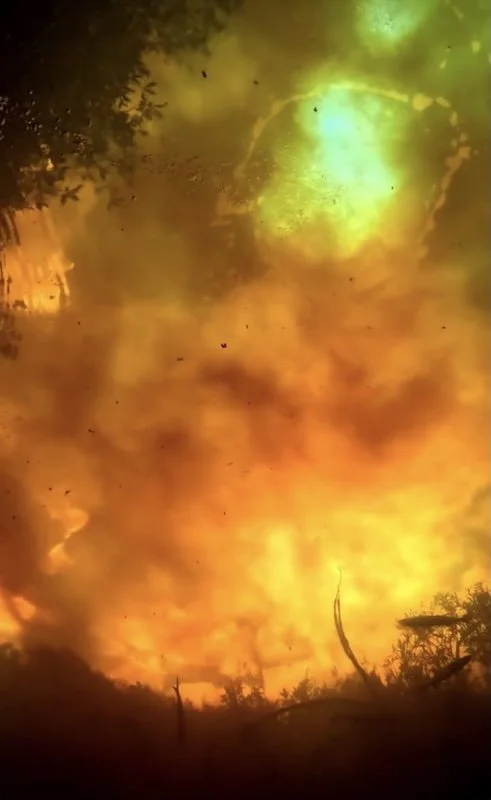
Tannin-rich water creating incredible colors at Casa Cenote after heavy rainfall in Tulum, October 2026.
Why Does Casa Cenote Turn Orange After Heavy Rain?
The explanation begins with the mangroves surrounding the cenote.
Mangrove trees, like many other plants, contain natural compounds called tannins.
You might already be familiar with tannins without realizing it. They’re also found in tea, coffee, and certain fruits.
When leaves, roots, and other plant material break down, tannins and other organic compounds can enter the surrounding water.
After several days of heavy rainfall, more water moves through the soil, vegetation, and mangrove environment, carrying these natural substances into the cenote.
The result is water that can take on beautiful shades of yellow, amber, orange, or brown.
According to the U.S. Geological Survey (USGS), tannins and other dissolved organic compounds from leaves, roots, and decomposing vegetation can naturally give water a tea-like color.
It’s a little like making a giant cup of tea, except nature is doing all the work.
And at Casa Cenote, the effect can be spectacular.
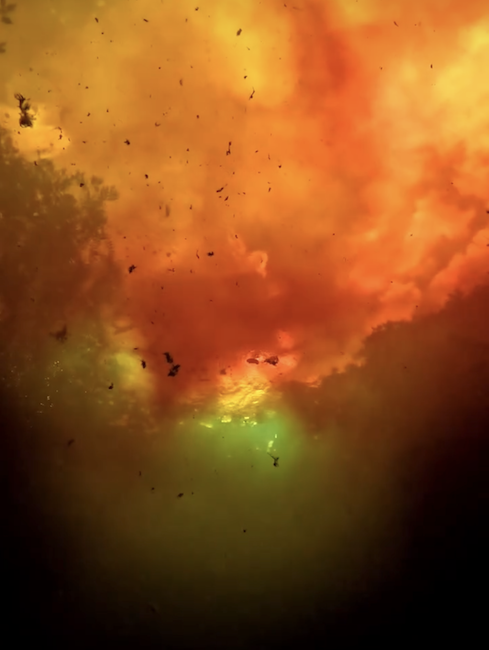
Natural tannins and sunlight creating cloud-like patterns underwater at Casa Cenote.
An Underwater Landscape That Looks Like Fire
What made this particular experience so memorable wasn’t simply the color of the water.
It was the way the colors interacted with sunlight.
Some areas appeared almost golden, while others had deep orange tones. Beneath them, patches of green water created an incredible contrast.
As we looked upward, the shapes and colors reminded us of clouds moving across the sky—or even flames suspended underwater.
The different concentrations of naturally colored water, combined with sunlight and water movement, can create some fascinating visual effects.
And because Casa Cenote is connected to a dynamic coastal groundwater environment, conditions can change considerably following periods of heavy rainfall.
For those of us who spend so much time underwater, it’s a beautiful reminder that even familiar places can look completely different from one visit to the next.
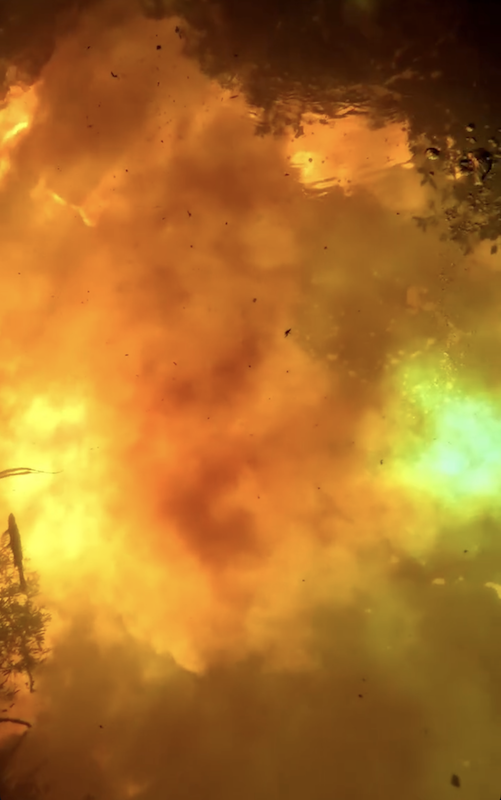
Natural tannins and sunlight creating cloud-like patterns underwater at Casa Cenote.
Is Tannin-Stained Water Bad for the Cenote?
Not necessarily!
Although the orange or brown color might surprise someone expecting perfectly clear water, tannins are a natural part of many freshwater and mangrove environments.
They’re associated with organic material from plants and play a role in the surrounding ecosystem.
The coloration itself doesn’t automatically mean the water is polluted.
Of course, water quality can’t be determined by appearance alone, and not every change in color is necessarily caused by tannins.
But the tea-colored water associated with decomposing vegetation is a well-known natural phenomenon.
In fact, it’s one of the many ways the surrounding jungle influences what happens beneath the surface.
Every Rainy Season Has Its Surprises
One of the things we love most about diving the cenotes around Tulum is that they’re constantly changing.
Rainfall, sunlight, groundwater movement, and the surrounding vegetation all influence what we see underwater.
Sometimes it’s a beautiful beam of sunlight entering a cavern. Other times it’s an unusual change in visibility or the appearance of different water layers.
And occasionally, after days of rain, we get something as extraordinary as these orange clouds at Casa Cenote.
We’ve been exploring these underwater environments for more than 20 years, and experiences like this still surprise us.
That’s part of the beauty of cenote diving: nature never shows us exactly the same thing twice.
These photographs were taken at Casa Cenote in October 2026, following nearly two weeks of rainfall around Tulum.
If you’re curious about exploring these remarkable freshwater environments yourself, discover our cenote diving experiences in Tulum.