
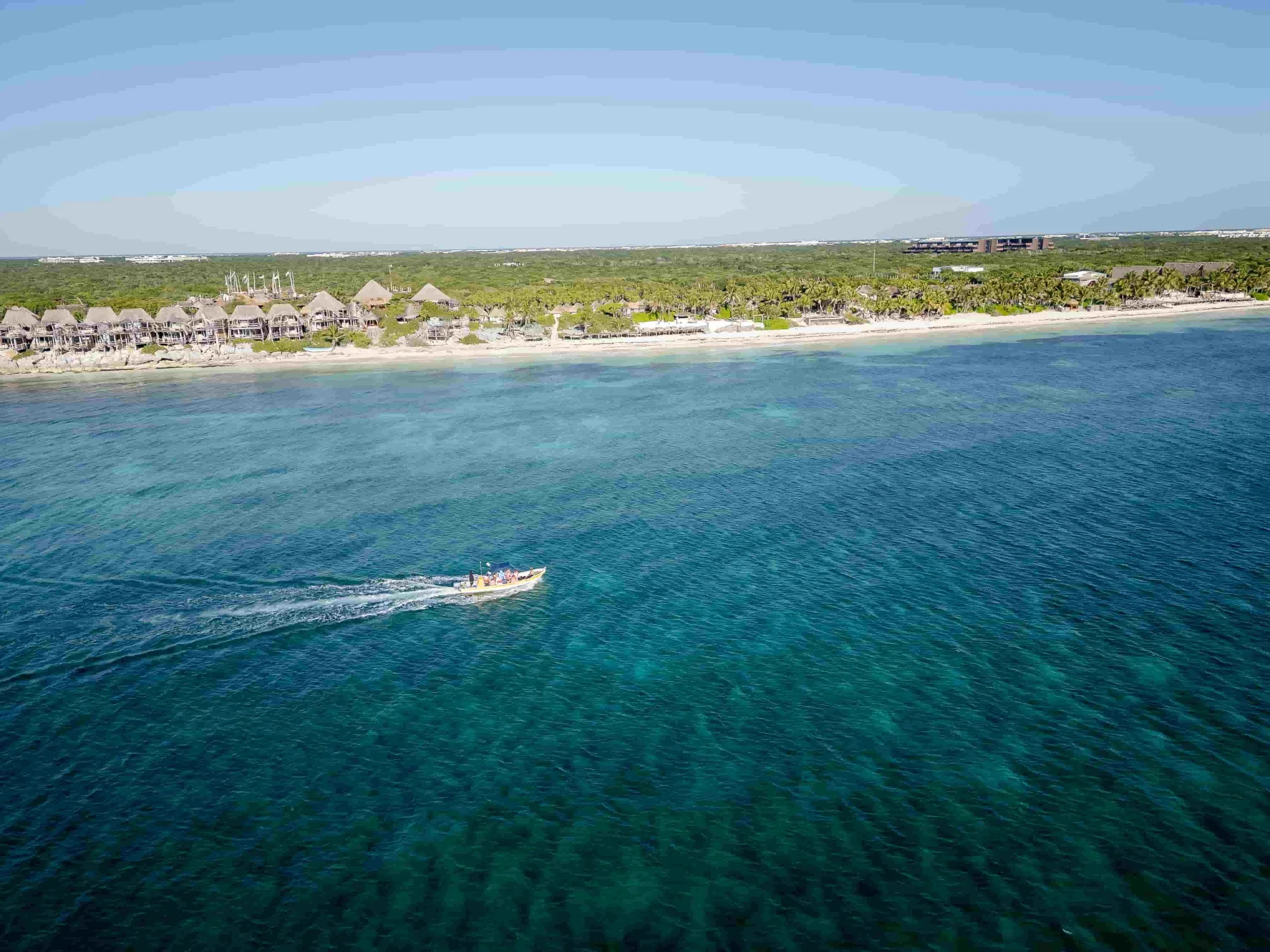
If you've been planning a trip to Tulum, chances are you've already seen the photos. A beach covered with brown seaweed. Headlines warning about record-breaking sargassum seasons. Videos asking whether Tulum is still worth visiting.
We understand why that's discouraging. We live here — we see it too.
Sargassum has become one of the biggest environmental challenges facing the Mexican Caribbean, and some days it genuinely changes the look of the beaches. But here's something many visitors don't discover until they arrive: Tulum was never just about its beaches.
Long before beach clubs and Instagram photos, people came here for one of the most extraordinary natural ecosystems on Earth — crystal-clear cenotes, the Mesoamerican Barrier Reef, the Sian Ka'an Biosphere Reserve, mangrove forests, underground rivers, sea turtles, and ancient Maya history. If you judge Tulum by the shoreline on a single day, you'll miss most of what makes this place special.
What Is Sargassum and Why Does It Reach Tulum?
Sargassum is a naturally occurring brown seaweed that floats across the Atlantic Ocean. Unlike most seaweed, it doesn’t grow attached to rocks or the ocean floor. Instead, it drifts freely on the ocean’s surface, creating floating habitats that provide shelter and food for fish, sea turtles, crabs, and many other marine species.
The problem isn’t that sargassum exists—it’s that the enormous blooms reaching the Caribbean today are far larger and more frequent than they used to be. Scientists believe this is the result of several factors working together, including nutrient pollution carried into the Atlantic by major rivers, warmer ocean temperatures, and changing wind and ocean current patterns. In other words, while sargassum is natural, the scale of today’s blooms is strongly influenced by human activity and a changing climate.
Some days the beaches are nearly clear. Other days, the wind pushes large amounts ashore, and conditions can change dramatically within just a few hours.
Should You Cancel Your Trip Because of Sargassum?
Our honest answer: probably not — but it depends on what kind of trip you're planning.
If your entire vacation is built around lying on the beach from sunrise to sunset at a beachfront resort, we'll be straight with you: heavy sargassum days can genuinely affect that experience, and no amount of reframing changes that. That's a fair thing to weigh before you book.
But for most visitors, the beach is only one piece of a much bigger trip. Ask people what they actually remember about Tulum a year later, and it's rarely the beach. It's their first sea turtle. Their first cenote. Swimming through freshwater so clear it barely looks real. Watching sunlight fall through a limestone cavern. Floating silently through the mangroves of Sian Ka'an with nothing but birds and wind for company.
Those are the memories people tell us about years later — not whether there happened to be seaweed on one particular afternoon.
The Ocean Doesn't End at the Shore
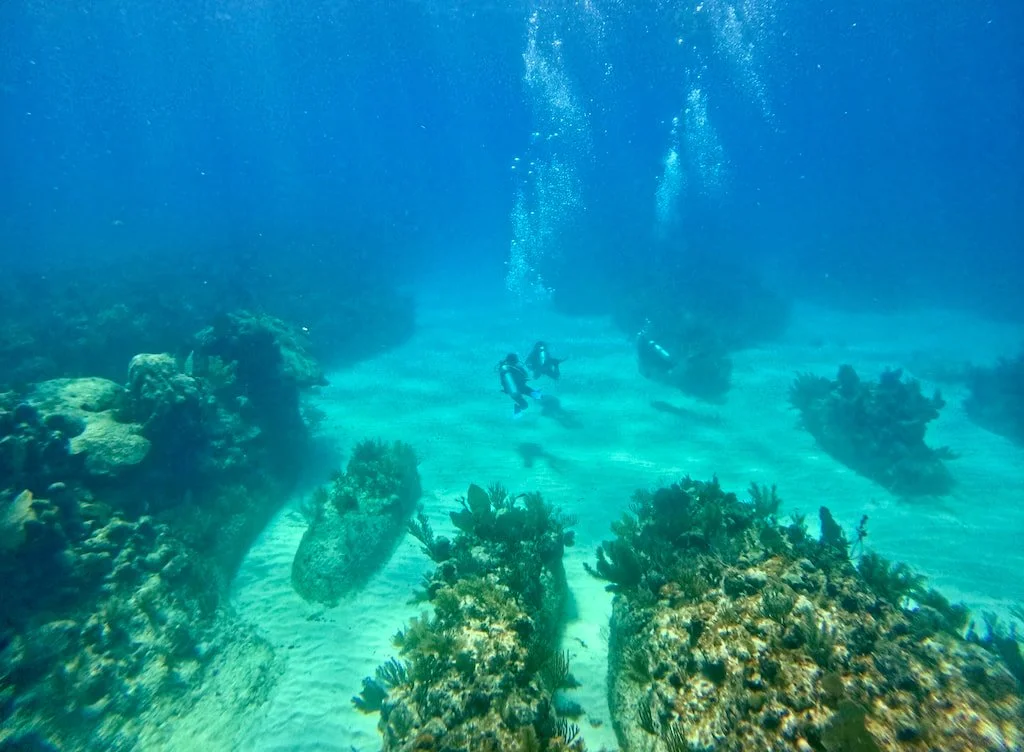
One of the biggest misconceptions about Tulum is that sargassum on the beach means the entire ocean is affected. That's not how it works.
The reef lies offshore, where conditions are often very different from what you see standing on the sand. Some days the shoreline accumulates seaweed while underwater visibility just a short boat ride away stays excellent. Marine life doesn't disappear because there's seaweed on the beach — sea turtles keep feeding, schools of tropical fish keep moving across the reef, spotted eagle rays keep gliding through the blue, and nurse sharks keep resting beneath coral ledges.
The Mesoamerican Barrier Reef—the second-largest coral reef system in the world—continues thriving beneath the surface regardless of what’s happening on shore. As local divers, we’ve had countless days where visitors were amazed to find crystal-clear water just minutes from a beach covered in sargassum. That’s one of the reasons reef diving in Tulum remains one of the best ways to experience the Caribbean, even during seaweed season. Nature is far more dynamic than a single photo can capture.
The Water Everyone Forgets About
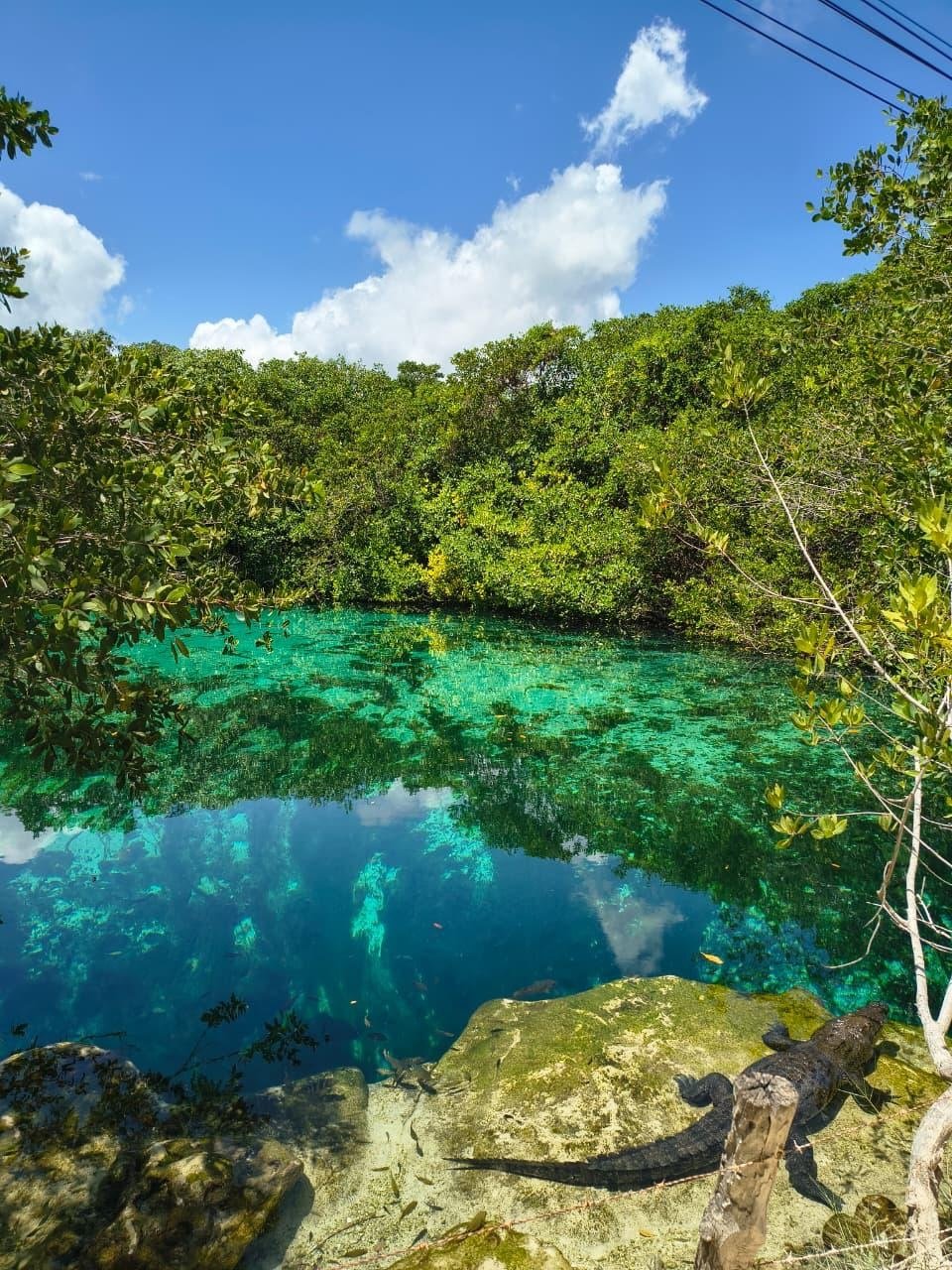
When people think about water activities in Tulum, they usually picture the Caribbean. But locals know there’s another world hidden beneath the jungle.
The Yucatán Peninsula holds one of the largest flooded cave systems on Earth. Thousands of cenotes connect through underground rivers, filled with freshwater that’s been naturally filtered through limestone for thousands of years. Unlike the open ocean, cenotes are completely shielded from sargassum—no waves, no tides, and no seaweed washing ashore. Just calm, crystal-clear water with visibility that often exceeds 100 feet (30 meters).
Whether you’re snorkeling for the first time or exploring a cavern as a certified diver, cenote diving in Tulum offers an experience unlike anywhere else on Earth. If you’d like to learn more about how these incredible natural formations were created and why they’re so unique, read our guide: What Are Cenotes? A Local Guide to Tulum’s Sacred Freshwater World.
Sian Ka'an: The Part of Tulum Most Visitors Never See

Many travelers first discover Sian Ka’an because they’re looking for alternatives to the beach during sargassum season. Ironically, it often becomes the highlight of their entire trip.
Sian Ka’an means “Where the Sky Is Born” in Maya, and it’s one of the largest protected biosphere reserves in the Americas. Recognized as a UNESCO World Heritage Site, it covers more than 1.3 million acres (528,000 hectares) of mangrove forests, wetlands, lagoons, coral reefs, and tropical jungle just south of Tulum. It’s one of the few places where the Caribbean Sea, the Mesoamerican Reef, mangroves, and the Yucatán’s underground freshwater system all come together.
A day in Sian Ka’an has nothing to do with crowded beaches. You float gently with the current through ancient mangrove channels where freshwater and saltwater meet. Along the way, you might spot dolphins in the lagoon, crocodiles resting along the banks, sea turtles, tropical birds, or even manatees if you’re lucky. Most of the time, the only sounds are the wind, the birds, and the water beneath you.
Sargassum simply isn’t part of the experience here. That’s why exploring Sian Ka’an on an eco tour has become one of our favorite recommendations—not just during seaweed season, but any time of year. It’s a chance to experience the Riviera Maya as it existed long before the first hotels were built.
Tulum Is More Than a Beach Destination
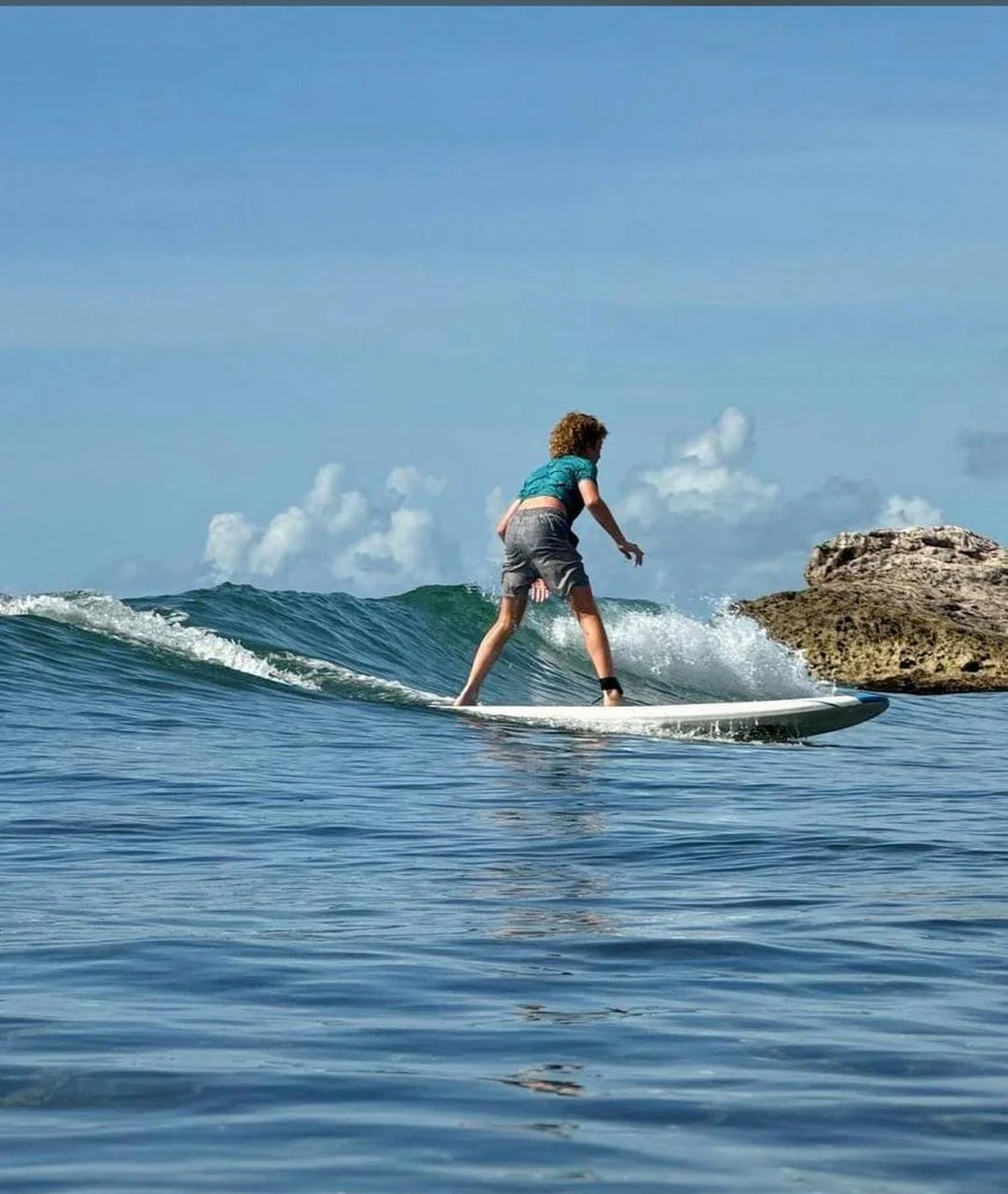
We love the beach—we’re there almost every day. We dive its reefs, go fishing, paddle out to surf when the waves arrive, watch the sunrise, and end the day with our feet in the sand. The Caribbean is one of the reasons we call this place home.
But when someone asks us what makes Tulum truly special, the conversation rarely ends at the beach.
It’s the freshwater cenotes hidden beneath the jungle. The coral reef just offshore. The mangrove channels of Sian Ka’an. The wildlife, the underground rivers, and the feeling that every day can become a completely different adventure.
That’s why sargassum doesn’t define Tulum for us. Some days the beaches are picture-perfect. Other days they’re covered in seaweed. Either way, we still have countless ways to enjoy this incredible coastline—whether it’s reef diving in Tulum, exploring crystal-clear cenotes, discovering Sian Ka’an, or even surfing in Tulum when the conditions are right.
The beach may be what first brings people to Tulum, but it’s rarely what makes them fall in love with it.
What to Do in Tulum During Sargassum Season
If you happen to visit during a heavier sargassum season—typically from spring through late summer—don’t worry. Some of the Riviera Maya’s most memorable experiences have nothing to do with the beach.
Explore a cenote. Whether you’re snorkeling or cenote diving in Tulum, these crystal-clear freshwater sinkholes are completely unaffected by sargassum and offer visibility that often exceeds 100 feet (30 meters).
Go reef diving or snorkeling. The Mesoamerican Barrier Reef lies offshore, where conditions are often very different from the shoreline. On many days, reef diving in Tulum offers excellent visibility even when seaweed has accumulated on the beach.
Discover Sian Ka’an. Drift through mangrove channels, spot dolphins, sea turtles, crocodiles, and tropical birds, and experience one of Mexico’s most spectacular protected areas on an eco tour in Tulum.
Help restore the reef. If you’re a certified diver looking for something truly meaningful, join one of our coral restoration dives in partnership with Oceanus A.C., where you’ll help transplant nursery-grown coral fragments back onto the reef and contribute directly to its recovery.
Catch a wave. Many visitors don’t realize that surfing in Tulum is possible during the right conditions. When northern swells arrive, it’s another great way to enjoy the Caribbean from a completely different perspective.
Slow down and enjoy local life. Finish the day with fresh seafood, tacos from a neighborhood favorite, or simply watch the sunset over the Caribbean. Some of the best memories in Tulum come from slowing down—not rushing between attractions.
The Bottom Line
Sargassum is real, and some days it changes what the beach looks like. We’re not going to pretend otherwise. But it doesn’t affect the cenotes, it doesn’t reach the mangrove channels of Sian Ka’an, and conditions on the reef can be completely different from what you see standing on the shore.
That’s why we believe Tulum has never been just a beach destination. Its true beauty lies beneath the surface, beyond the shoreline, and deep within the surrounding nature. The coral reef, the cenotes, the wildlife, and the protected ecosystems are what make this corner of the Caribbean unlike anywhere else in the world.
If you plan your trip around those experiences—not just the beach—you’ll leave with memories that have nothing to do with seaweed.
FAQ About Seaweed in Tulum
Does sargassum affect scuba diving in Tulum?
Usually not. Sargassum collects along the shoreline, while reef dive sites are located offshore and cenotes are inland. Although surface conditions vary from day to day, diving and snorkeling activities often continue with excellent underwater visibility.
When is sargassum season in Tulum?
Sargassum can appear at any time of year, but it’s typically most noticeable between April and August. The amount varies each season and even from one day to the next, depending on wind, currents, and weather conditions.
Are cenotes affected by sargassum?
No. Cenotes are freshwater sinkholes connected by underground rivers, completely separate from the ocean. Because of this, they remain crystal clear regardless of sargassum conditions along the coast.
Can you still swim in Tulum during sargassum season?
Yes. Many beaches remain swimmable, although the experience depends on the amount of seaweed that has washed ashore that day. If you’re looking for consistently clear water, cenotes, reef excursions, and Sian Ka’an are excellent alternatives.
Is Tulum still worth visiting during sargassum season?
Absolutely. While sargassum can affect some beaches, many of Tulum’s most memorable experiences—including cenotes, reef diving, snorkeling, surfing, and exploring the Sian Ka’an Biosphere Reserve—are largely unaffected. For many travelers, those experiences become the highlight of their trip.