
A few days ago, we were back underwater on Tulum's reef, cleaning the coral nursery and caring for the small coral fragments that will eventually become part of the natural reef.
It's a different kind of diving day for us.
Instead of simply exploring the reef and enjoying its marine life, we're spending time helping it recover.
At Mexidivers, we've spent more than 20 years exploring and operating along Tulum's coastline. As the only dive center in Tulum operating its own legally permitted boats directly from Tulum Beach, we run one of the area's largest local reef diving operations.
This connection to the reef, along with our boats, experienced crew, and daily presence on the water, created a natural opportunity to collaborate with Oceanus A.C., a Mexican nonprofit organization with years of experience restoring coral reefs throughout the Mexican Caribbean, including Tulum.
Building on Oceanus' existing conservation work, we joined forces to establish this new coral nursery on October 9, 2025. Mexidivers has been involved since day one, supporting the project with our boats, diving operations, and hands-on restoration work.
Now, just over a year later, we're continuing this community effort alongside local dive guides who share the same love for the ocean.
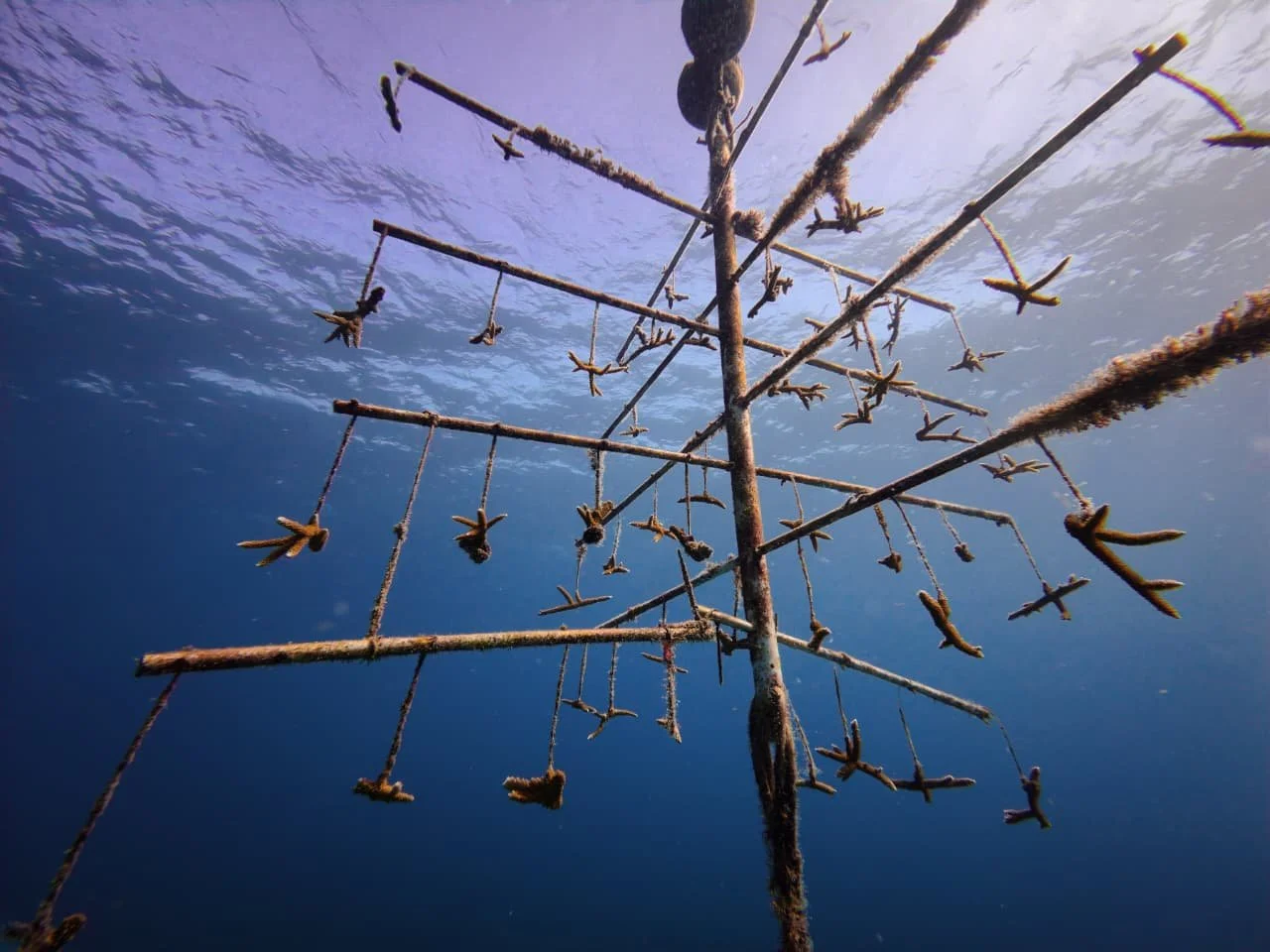
The underwater coral nursery, where young coral fragments are cared for before being transplanted onto Tulum's reef.
A Small Coral Nursery With a Big Purpose
If you've never seen an underwater coral nursery, imagine a small tree suspended beneath the surface, with dozens of tiny coral fragments hanging from its branches.
That's exactly what we're working with.
These structures allow coral fragments to grow while remaining accessible to the divers who care for them.
The process takes patience. Corals are living animals, and although they may look like underwater plants or rocks, they need suitable conditions to grow and thrive.
During our restoration dives, we carefully clean the nursery structures, remove algae and other unwanted growth, and check the coral fragments.
It's hands-on work, and every visit is an opportunity to see how the nursery is developing.
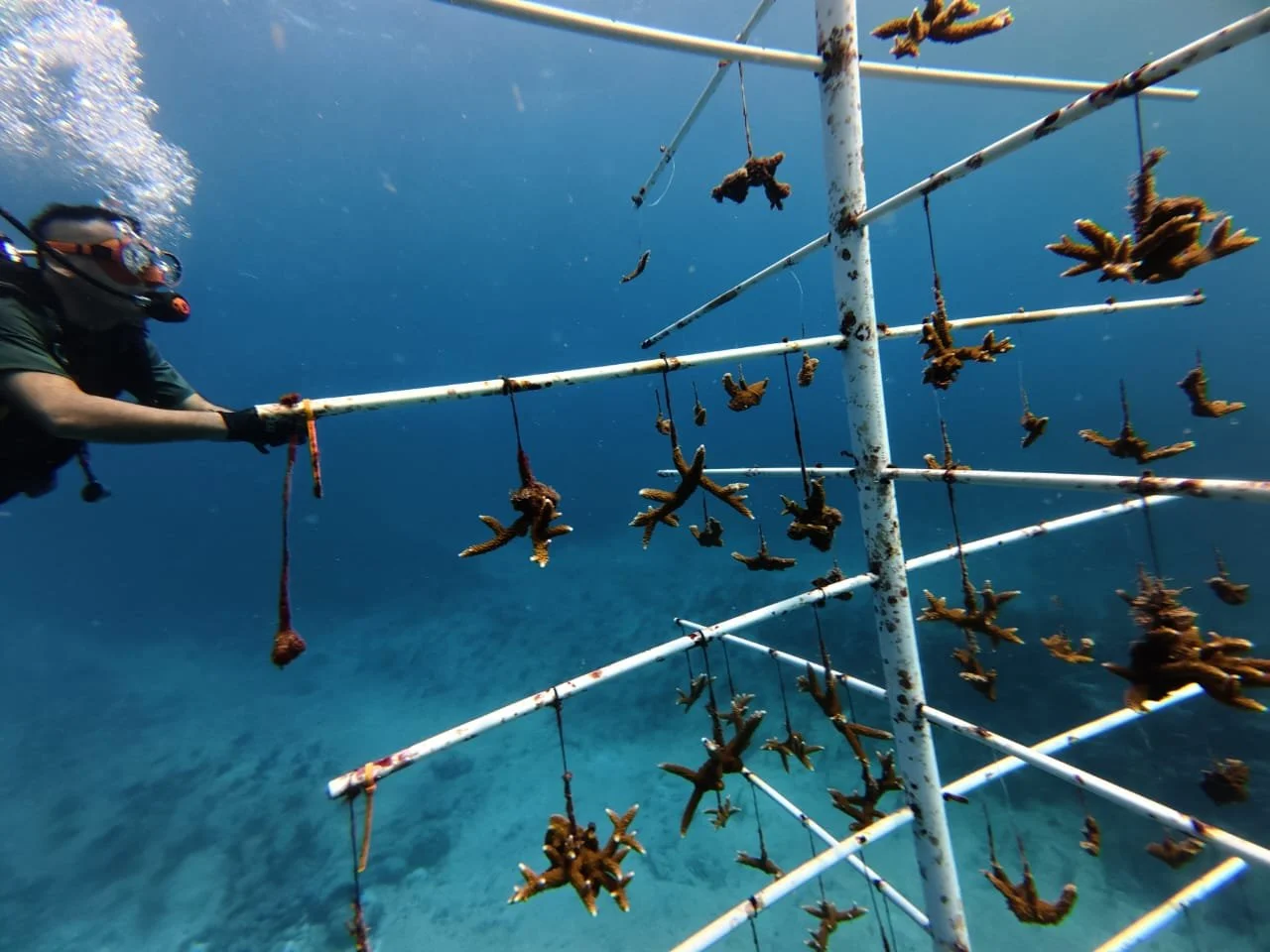
Small coral fragments growing on the suspended nursery structure.
From the Coral Nursery Back to the Reef
Once the coral fragments have grown enough and are ready to be transplanted, we move on to the next stage.
The fragments are carefully transferred to selected areas of the natural reef, where we attach them using special marine cement.
This helps keep them securely in place so they can continue growing in their natural environment.
But planting coral is only part of the process.
The nursery needs regular maintenance, and the transplanted corals also need time and suitable conditions to establish themselves.
It's not something that happens overnight.
What makes the experience rewarding is knowing that every small task contributes to a much larger restoration effort.
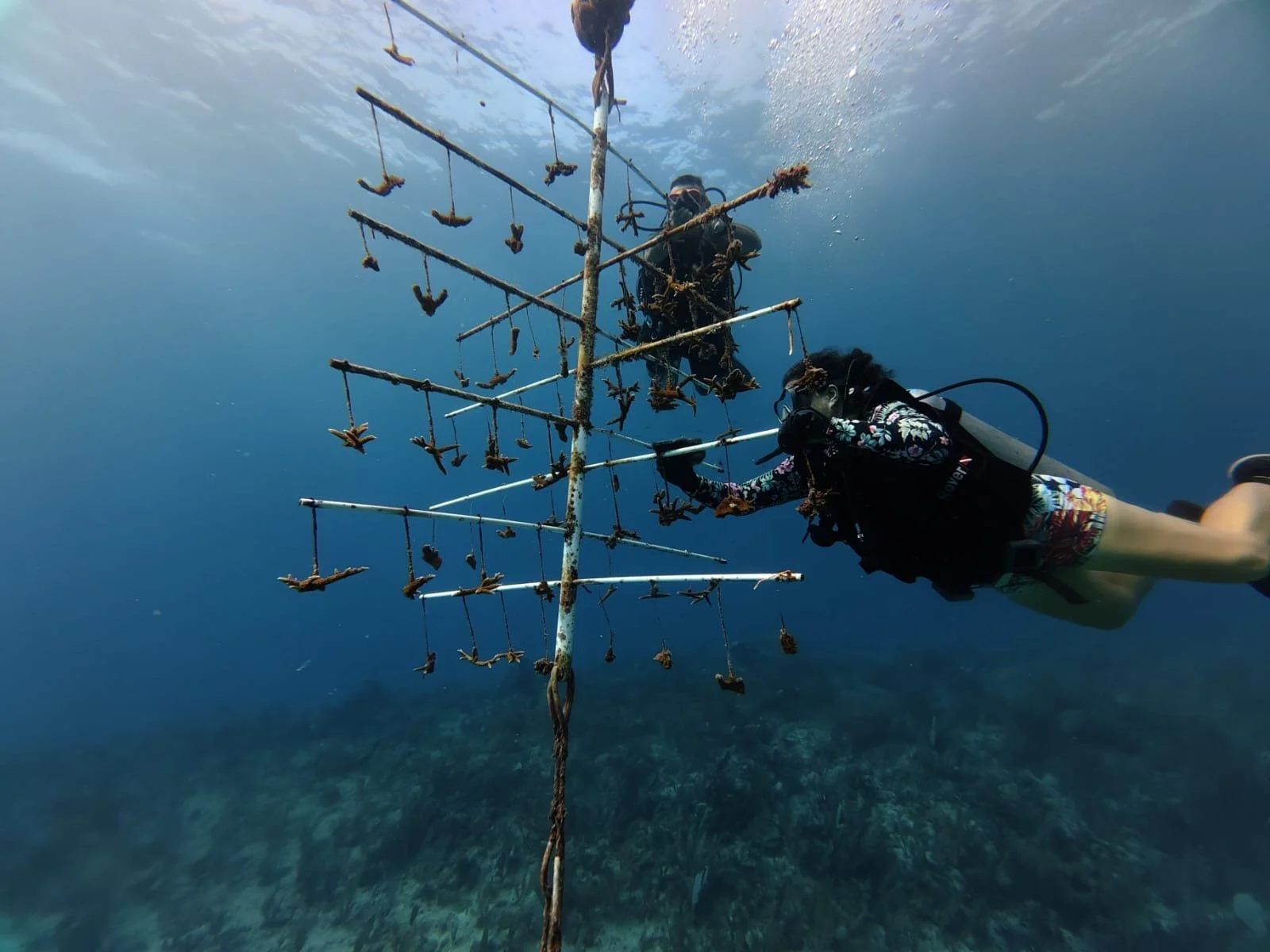
Local dive guides maintaining the coral nursery during a restoration dive.
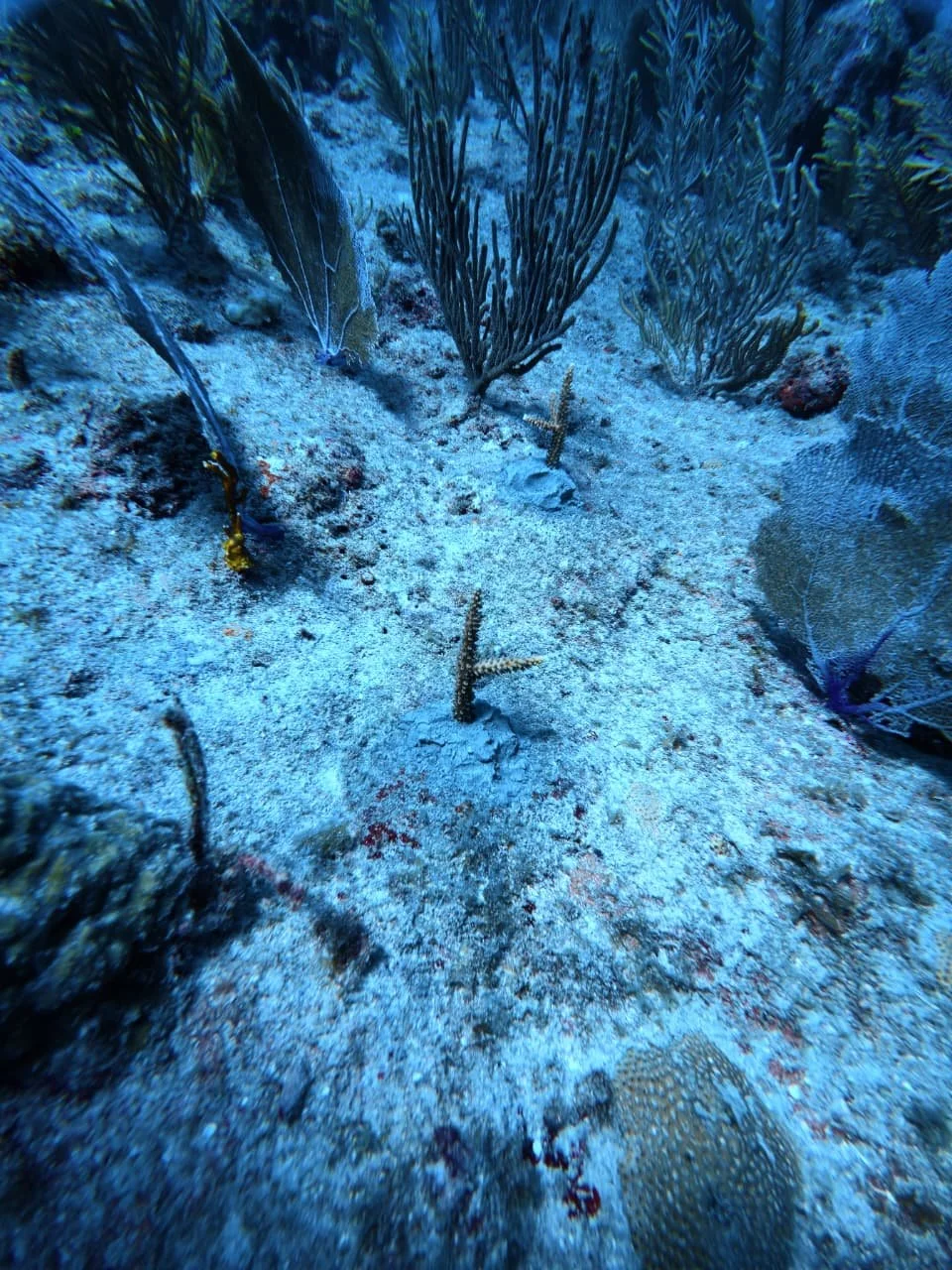
Young coral fragments secured to the natural reef using marine cement.
Why Coral Restoration Matters in Tulum
Tulum is part of the Mesoamerican Reef, the second-largest barrier reef system in the world.
These reefs are home to an incredible variety of marine life. They provide shelter for fish, help protect our coastline from strong waves, and support local communities that depend on fishing and tourism.
Unfortunately, coral reefs throughout the Caribbean face increasing pressure from rising ocean temperatures, coral diseases, pollution, and other environmental changes.
Coral restoration offers a way to support the recovery of damaged reef areas by growing healthy coral fragments and carefully transplanting them back into their natural environment.
Of course, planting corals alone won't solve every challenge our reefs face. Protecting water quality, reducing environmental pressures, and caring for the existing reef are just as important.
But restoration is one meaningful way we can take action locally.
A Community Working Together for Tulum's Reefs
One of the things we love most about this project is the people involved.
This isn't exclusively a Mexidivers initiative. It's a community restoration effort conducted through Oceanus A.C., an organization with years of experience restoring reefs throughout the Mexican Caribbean.
The project welcomes participation from the certified diving community through its coordinated restoration activities.
At the moment, most participants are local dive guides from Tulum, with members of the Mexidivers team regularly joining the maintenance and planting dives.
We all share something in common: a deep connection to the ocean.
For many of us, these reefs are more than places where we work. They're places we've explored for years, where we've learned to dive, guided visitors, and experienced some of our most memorable moments underwater.
Being able to give something back makes these dives particularly special.
More Than Just Another Dive
Every time we return to the nursery, we're reminded that protecting the ocean takes time, consistency, and people who care.
Some days we're cleaning the coral trees. Other days we're checking the fragments or helping plant new corals onto the reef.
And although the work can be slow, there's something incredibly rewarding about knowing we're contributing to the future of the places we love.
We've spent more than 20 years exploring the underwater world around Tulum, and the ocean continues to give us new reasons to appreciate it.
For us at Mexidivers, participating in this restoration project is a small way of giving something back.
The reef has been part of our story for generations. Now we're happy to be part of its recovery.
We'll continue sharing updates from the coral nursery, the people involved, and the progress of this beautiful community effort here in Tulum.